
Out in the country the problem is not decoration, it is that nobody can find your entrance. Ranch entries around here usually get the gate and the arch over the drive lit so guests, deliveries, and ranch hands can see where to turn in, plus markers down a long driveway so the turns are safe at night.
Wired or solar
It comes down to whether there is power at the gate. If there is, a wired run is steadier and brighter. If there is not, and often there is not, the common answer out here is low voltage DC lights running off a battery bank with a solar panel to keep it charged.
The arch
Most ranch entries have an arch or a header over the drive, and that is the natural thing to light. It reads from the road, it marks the turn, and it does not require running power the length of the driveway.
Driveway markers
Low markers down the drive make the turns safe after dark, especially on a long caliche drive with a curve in it. These are almost always solar out here for the simple reason that trenching power down a quarter mile of driveway is not worth it.
- The real goal is being findable from the road, not decoration
- Power at the gate decides wired versus solar
- Solar with a battery bank is common where there is no power run
- Markers down a long drive make night turns safer
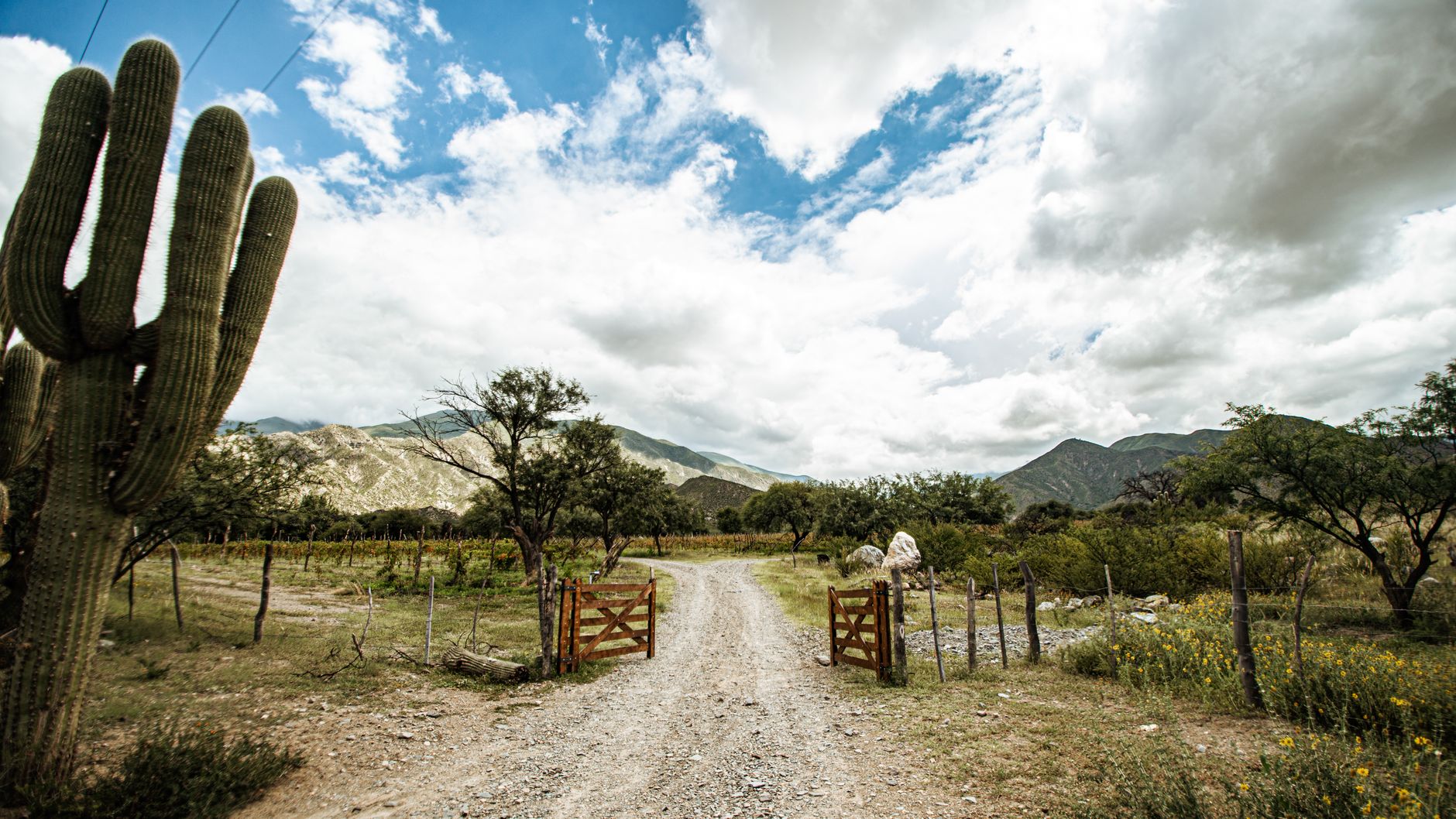
Questions people ask about Ranch and Gate Entry Lighting
Can gate lights run where there is no power at the road?
Yes, and out here they usually do. Low-voltage DC systems with a solar panel and a battery bank are the standard answer for ranch entrances, because trenching power a quarter mile to the county road costs more than the whole lighting job. The battery carries the night, the panel refills it by day.
Will entrance lighting survive the wind out in the open?
If it is built for it. A ranch gate takes the prevailing South Texas wind with no shelter at all, so fixtures need to mount to structure, not float on spans, and the hardware needs to be rated for it. This is exactly where cheap kit fails in one season and rated gear keeps running.
How far from the house can I run lighting?
Distance is a design question, not a hard limit. Long low-voltage runs lose brightness unless the wire is sized up or power is fed at more than one point, which is the same power-injection idea the pixel builders use. Past a certain distance, a small solar setup at the far end beats hauling copper.
New to this? The plain-English guide to ordering walks through what to decide first.